
Wildlife & Ecology
Flora
Grassland
The grassland ecosystem is prevalent at Heartwood and showcases a diversity of herbs and annuals. Yamba root (Perideridia gardeneri), a perennial bulb, was a staple in the local native Californians’ diet. Through intentional grassland fires, the original inhabitants took part in land management practices that encourage yampa, as well as other edible bulbs. Star thistle (Centaurea solstitialis) is a highly invasive plant and is scattered throughout Heartwood property’s disturbed soils.
Ponderosa Pine Woodland
This woodland is found on a small portion of the property near the airstrip and again mixed with incense cedars around the main campus. These seem to have been planted nearly fourty years ago.
Black Oaks
Black Oaks (Quercus Kelloggii) are very important tree specias and serve both as a habitat and a mast crop for wildlife. California natives held the acorns in high regard because of their low tannin content and high protein. The primary acorn-producing oaks at Heartwood are large specimens growing in isolation surrounded by grasslands.
Chaparral
The chaparrals of Heartwood are dominated by Manzanita (Arcostaphylos spp.), but also contain mock orange (Philadelphis spp.) and coffee berry (Rhamnus california). Chaparral plant communites grow on fast draining and nutrient poor soils. They are highly fire adapted and have suffered since fire supression became the dominant land management practice of the West. Wildfires assist in recycling nutruents and promoting a healthy vegetative understory. In absence of fire, a diversity of plants and animals are lost as chaparral success into forest.
Douglas Fir Woodland
These forests are dominated by Dougle fir and complimented by an understory of madrones, buckeyes, and maples. The woodland that extends up and down the hill from the Buckeye cabin is the most mature example of this forest type.
Mixed Oak Woodland
These forests are a mixture of black oak, interior live oak, and Oregon white oak. They are used mostly as traveling and bedding routes by terrestrial mammals and food quality is fairly low and seasonal.
Heartwood Outlying areas Masterplan, April 2008
2.1.11 Vegetation (Plant Communities)
Mixed Woodland
These forests are not very abundant on the Heartwood property, but they harbor quite a diverse host of plants and associated animals. They contain Douglas first. madrones, buckeyes, maples, and mock orange.
Trees
Black Oak
Garry Oak
Interior live Oak
California Bay Laurel
Big Leaf Maple
Incense Cedar
California Buckeye
Gray Line
Douglas Fir
Sargent Cypress
Canyon Live Oak
Madrone
Monterey Pine
Ponderosa Pine
Wild Shrubs & Woody Perennials
Manzanita
Mock Orange
Coyote Brush
Toyon Coffeeberry
Poison Oak
Fauna
-
Bobcat
Dusky Footed Woodrat
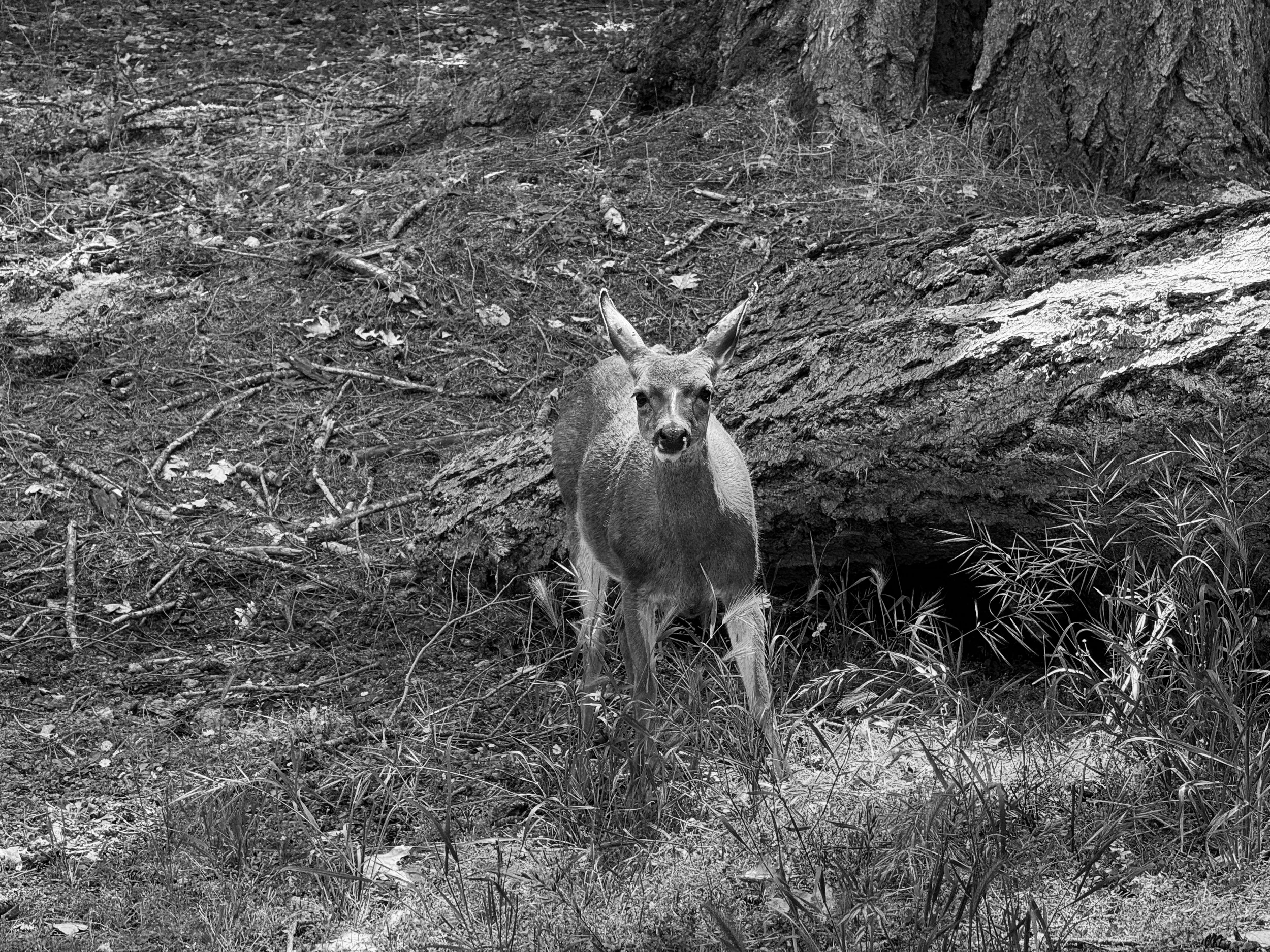
Black Tailed Deer
Western Grey Squirrel
Coyote
Mountain Lion
Wild Boar
Jack Rabbit
Brush Rabbit Raccoon
-
Pacific Tree Frog
Ring Necked Snake
Rattlesnake
-
Red Shafted Flicker
Kestrel
Red Tail Hawk
California Towhee
Spotted
Towhee
Acorn Woodpecker
White Crowned Sparrow
American Goldfinch
Western Bluebird
Wild Turkey
Black Phoebe Scrub Jay
Junco
Harrier Hawk
Ruby Crowned Kinglet
Chestnut backed Chickadee
Band-tailed Pigeon
Varied Thrush
Turkey Vulture
European Starling
American Robin
At the Western edge of the Eel River
Canyon Preserve and Emerald Waters Preserve
Other places with similar climates
Braganca, Portugal
Isernia Region, Northern Italy
Foothills of Mount Parnassis, Greece
xTemuco, Araucania Region, Chile
Ankara Province, Turkey
Atlas Mountains near Fez, Morocco
Snowy Mountains, New South Wales, Australia